
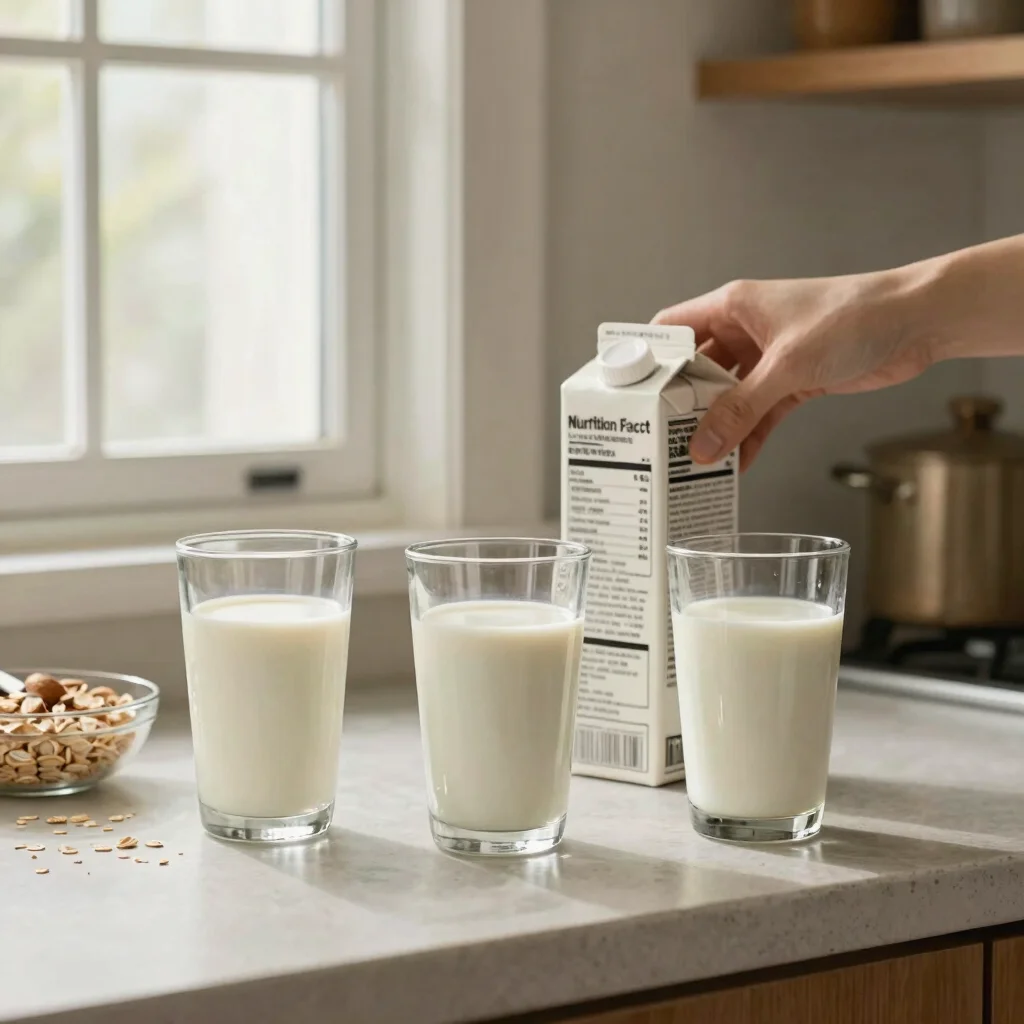
A splash of plant milk in coffee and a bowl of cereal ask different things from a carton. One may need to foam or taste mild; the other might be part of breakfast’s protein and calcium. There isn’t one best plant milk for every kitchen, so start with what you want it to do.
Compare nutrients, not claims
If you want a plant-based drink with protein closer to dairy milk, unsweetened fortified soy is often a useful place to start. Oat and almond drinks are commonly lower in protein, though products vary by brand and formulation. Check the Nutrition Facts panel for protein, calcium, vitamin D, and added sugars rather than relying on words like “original” or “extra creamy.”
Fortification is not identical across cartons, so check the ingredient list and nutrition panel each time you switch brands. Some drinks include nutrients such as calcium and vitamin D, while others may not; shaking the carton can also help distribute added minerals that settle. If you have a specific nutrition need, a registered dietitian or clinician can help you interpret labels for your situation.
Match the carton to the meal
For cereal, oatmeal, or a smoothie, choose a flavor and texture you enjoy, then compare price per ounce if several options work. Unsweetened versions are handy in savory cooking because they add less sweetness to mashed potatoes, soups, and sauces. For baking, a plain, unsweetened drink is a flexible stand-in in many recipes, though it may not behave exactly like dairy in every formula.
Taste matters too: soy, oat, and almond each bring their own flavor, and a store brand may suit your recipes as well as a pricier carton. If you use plant milk often, compare the labels of a couple of options you can reliably find nearby. The best choice is the one that fits your meals, budget, and nutrition priorities.
Leave a Reply