When the grocery budget is tight, a useful pantry staple is one that can change shape from dinner to dinner. Beans and lentils are low-cost sources of plant protein, and they pair easily with rice, tortillas, pasta, or whatever vegetables are available. You don’t need to replace every familiar meal to make room for them.
Choose the format that fits
Dry beans often cost less per serving, but canned beans can be worth the convenience when time, storage, or cooking fuel is limited. If you have dry beans, cook a batch and refrigerate or freeze portions for later; if you use canned, drain and rinse them if you want to reduce some of the sodium from the canning liquid. Compare unit prices where they’re shown, but choose the format you’ll actually use.
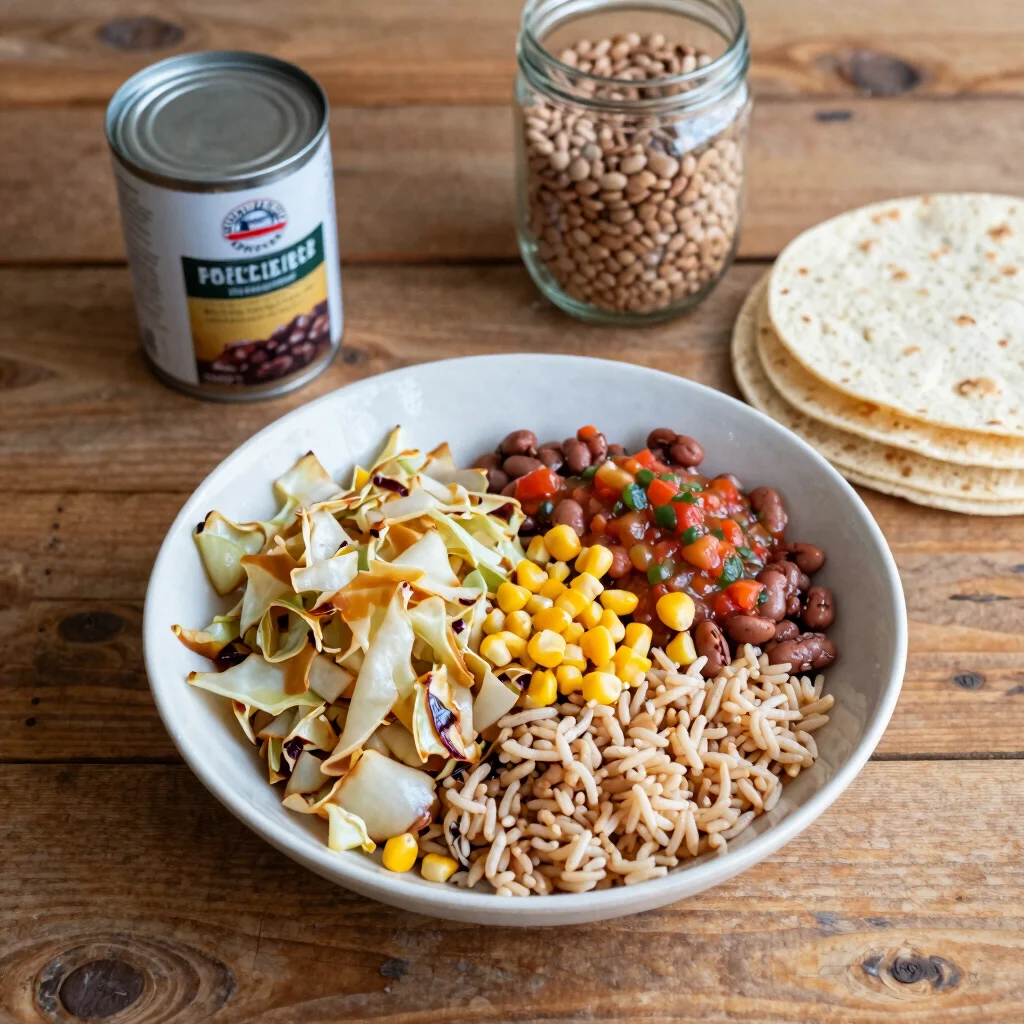
For a quick meal, warm beans with onion or garlic, a pinch of cumin, and a spoonful of salsa or canned tomatoes. Serve over rice, tuck into tortillas, or spoon onto a baked potato. Shredded cabbage, frozen corn, or leftover vegetables add texture without requiring a separate specialty purchase.
Give leftovers a new direction
Make the first serving a rice bowl, then turn the remaining beans into tacos by mashing some of them with a fork and adding a little water as they heat. The next day, thin what remains with broth or water for a simple soup, adding pasta or frozen greens if you have them. Changing the seasoning and format makes one batch feel less repetitive.
For SNAP households, eligible food purchases can include staples such as beans, rice, and fresh or frozen vegetables, though individual program rules and retailer participation matter. Before shopping, check your local store’s unit prices and plan around ingredients you already have. A flexible pantry plan should make meals easier—not turn a tight budget into another set of rules.
Leave a Reply